


 English
 русский
 Español
 Deutsch
A rebounder and a mini trampoline are essentially the same product, but the words usually signal different intentions. "Rebounder" typically refers to a fitness-grade unit built for regular exercise, while "mini trampoline" is the broader, often cheaper category that includes toy-grade and recreational models. If your goal is a consistent workout, choose a fitness rebounder. If you need a casual bounce for kids or occasional play, a basic mini trampoline will do.
The second decision is whether to get a model with a handle or without one. Beginners, older adults, and anyone with balance concerns should pick a mini trampoline with a handle; experienced users who want freedom of movement are better served by a fitness rebounder without a handle. The sections below explain why, with specifics to help you buy confidently.
Rebounder vs Mini Trampoline: The Real Differences
Both products share the same basic structure: a round frame, a jumping mat, and springs or elastic bands. The differences lie in build quality, intended use, and how the bounce feels under your feet.
| Feature | Fitness Rebounder | Standard Mini Trampoline |
|---|---|---|
| Primary purpose | Cardio, low-impact training | Casual bouncing, play |
| Typical diameter | 38–48 inches | 36–40 inches |
| Weight capacity | 250–450 lbs | 150–220 lbs |
| Suspension | Bungee cords or tuned springs, quiet | Metal springs, often noisier |
| Bounce feel | Soft, controlled, joint-friendly | Firmer, less forgiving |
| Typical price | $80–$300+ | $40–$100 |
These ranges are general, and some mini trampolines are as well made as rebounders. Always check the weight rating and suspension type rather than relying on the product name alone.
Why Rebounder Workouts Are Worth Considering
Rebounding is popular because it delivers cardio benefits with less joint stress than running. A frequently cited NASA-related study from 1980 found that bouncing was more efficient than jogging in terms of oxygen consumption relative to biomechanical stress. An American Council on Exercise (ACE) study also found that rebounding at a moderate pace burned roughly 9.4 calories per minute, comparable to a brisk jog for many participants.
Practical benefits you can expect
- Lower impact on knees and ankles than hard-surface cardio
- Improved balance and core engagement because the surface is unstable
- Short sessions of 15–20 minutes that still raise your heart rate
- Indoor workouts that do not depend on weather
Calorie burn varies with body weight, intensity, and technique, so treat any figure as an estimate rather than a guarantee.
Fitness Rebounder Without Handle: Best for Freedom of Movement
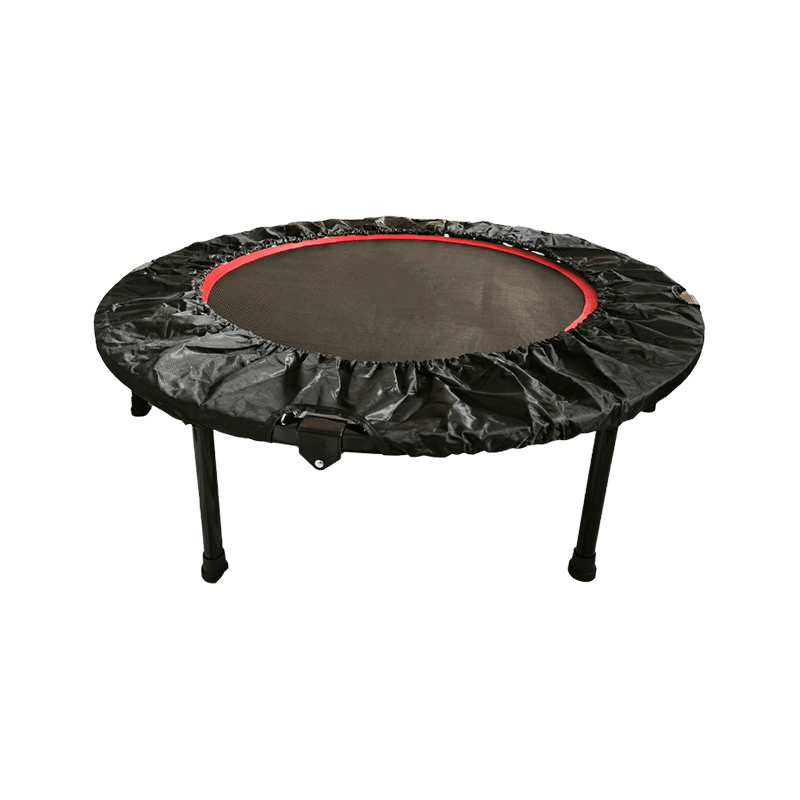
A fitness rebounder without a handle gives you a clear 360-degree workout space. This design suits intermediate and advanced users who want to run in place, twist, do high knees, or follow aerobic and dance routines without anything in the way.
Who should choose a no-handle rebounder
- Users who are already comfortable with balance exercises
- People following rebounder dance or HIIT videos with wide arm and leg movements
- Anyone short on storage space, since most no-handle models fold flat or disassemble easily
- Households sharing the unit among several people with different heights
Drawbacks to be aware of
Without a handle, there is nothing to grab if you lose your balance. Beginners often feel unsteady during the first one or two weeks, and mistakes such as landing on the edge of the mat can lead to falls. If you go this route, start with low, gentle bounces and keep the unit away from furniture and hard corners.
Mini Trampoline With Handle: Best for Stability and Confidence
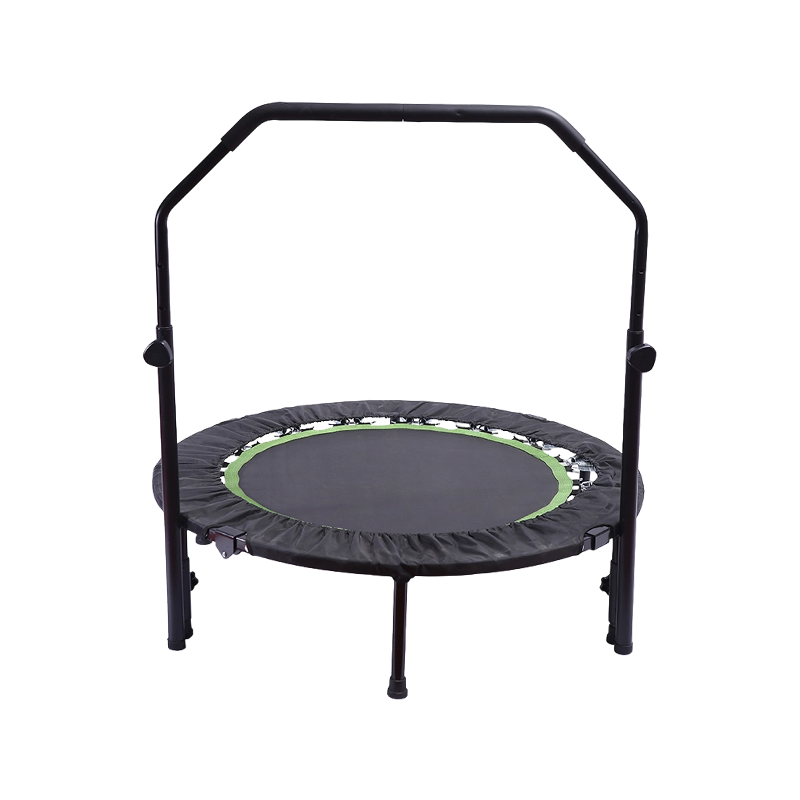
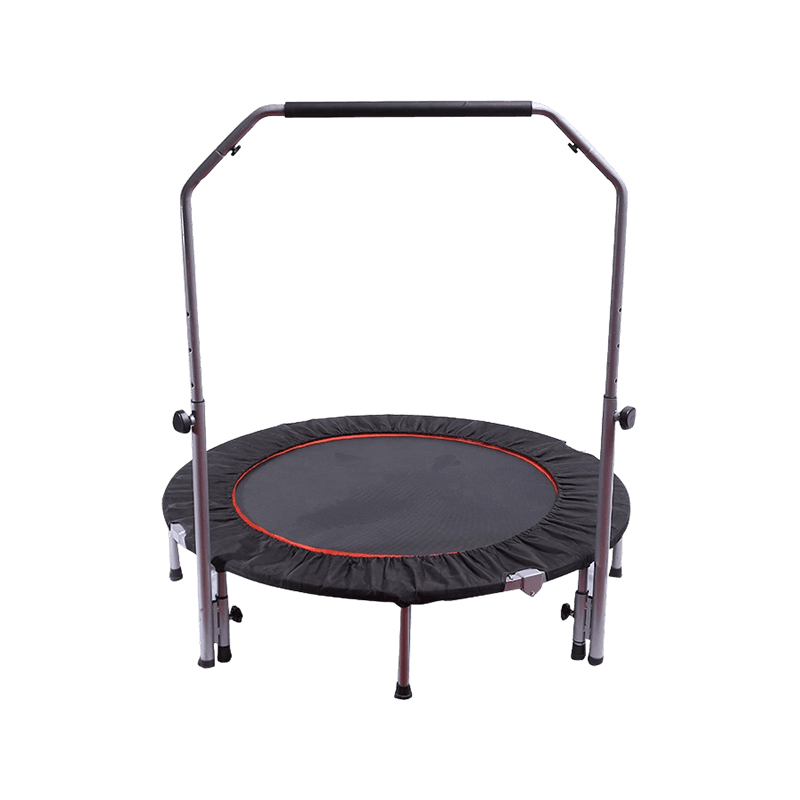
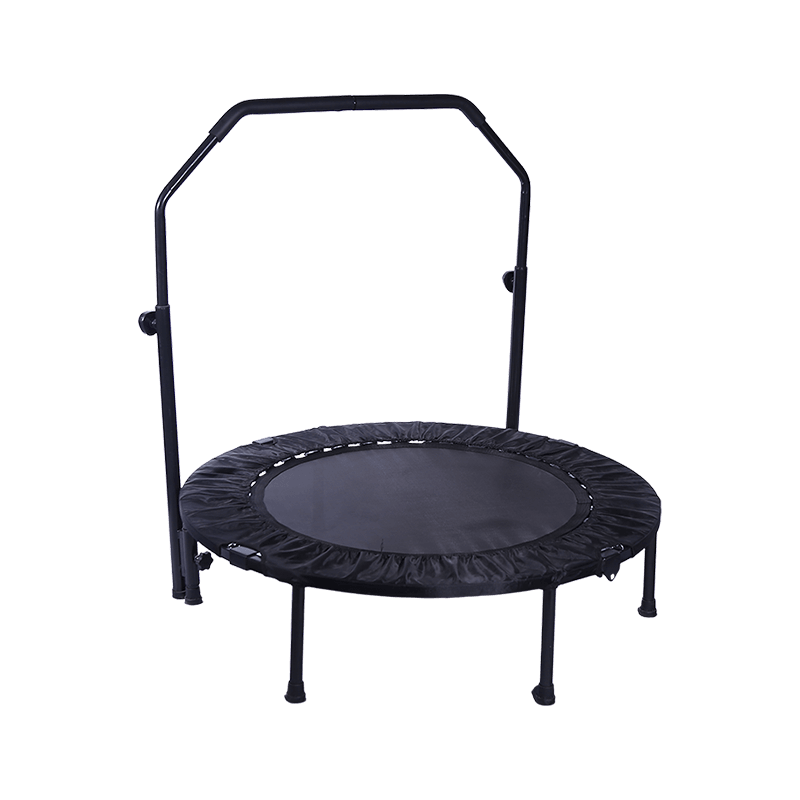
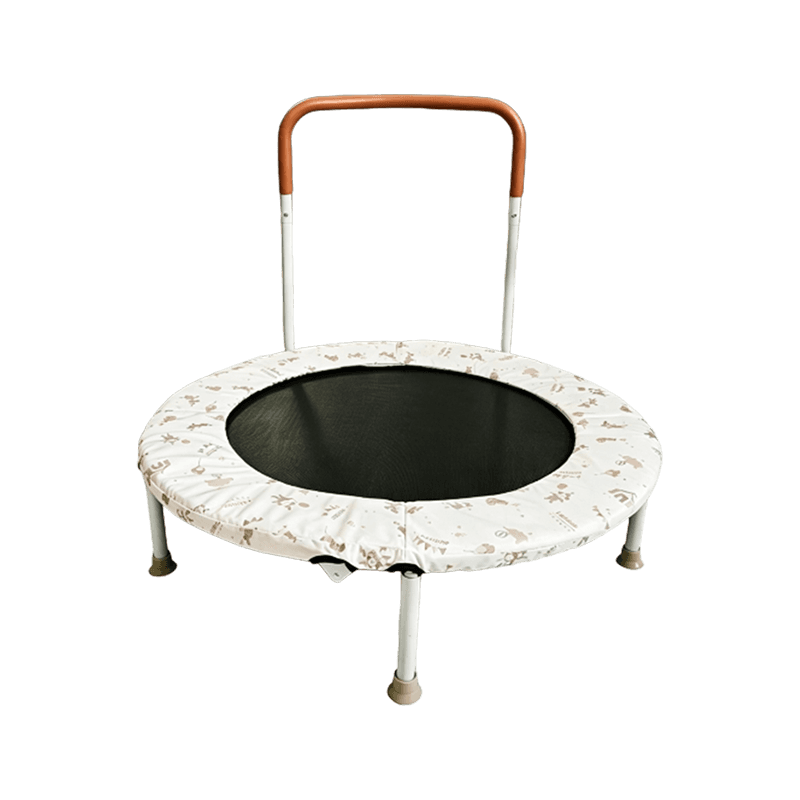
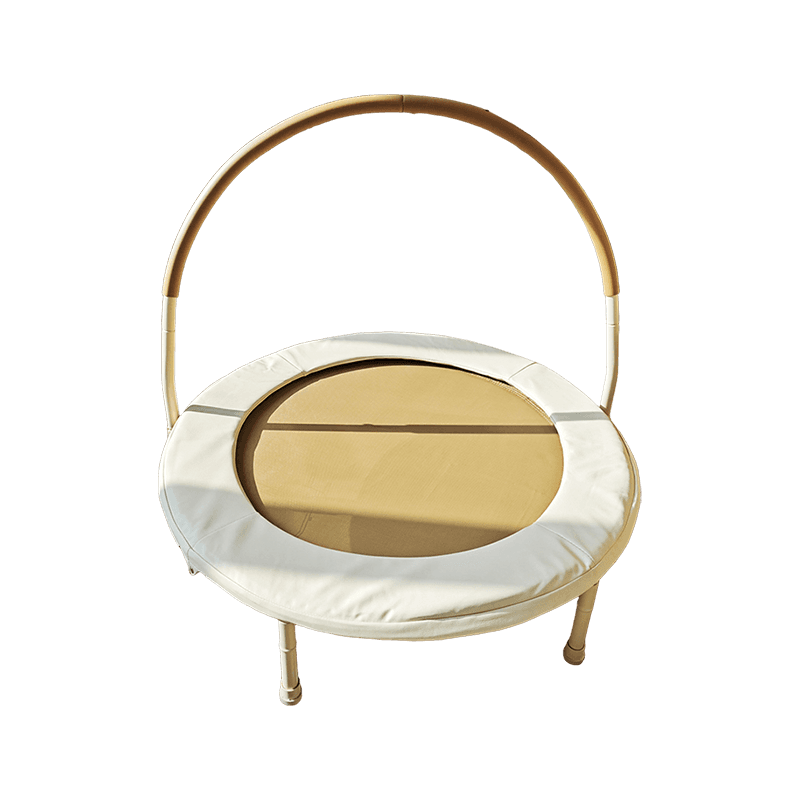
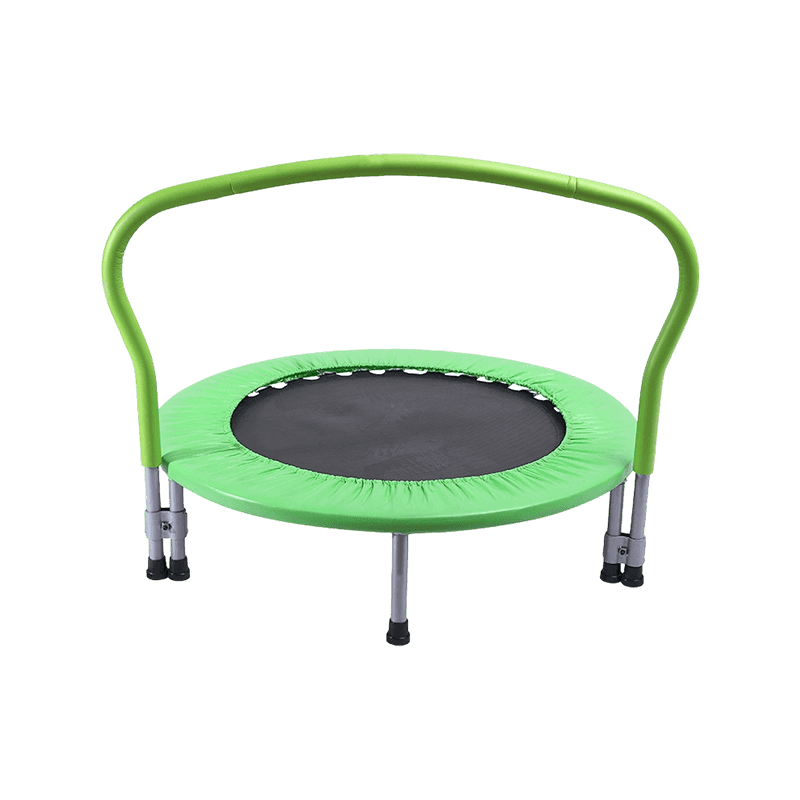
A mini trampoline with a handle adds a padded, adjustable bar you can hold while bouncing. It is the safer starting point for seniors, rehabilitation users, and complete beginners. Many handles adjust across 3–5 height settings, so you can match them to your waist or chest level.
Who benefits most from a handle
- Adults over 60 who want a gentle way to stay active
- People recovering from lower-body injuries, with clearance from a doctor or physical therapist
- Beginners who feel nervous about falling
- Users who want to watch TV or read while doing light bouncing
Limitations of handle models
The handle restricts arm movement and can make some routines awkward. It also adds weight and bulk. Cheaper handles may wobble, so look for a model where the bar locks firmly into place and the base legs have non-slip rubber feet.
Handle vs No Handle: Side-by-Side Comparison
| Factor | With Handle | Without Handle |
|---|---|---|
| Stability support | High | None built in |
| Range of motion | Limited on one side | Full 360 degrees |
| Best for | Beginners, seniors, rehab | Experienced users, dance, HIIT |
| Storage | Bulkier, handle may detach | Compact, often foldable |
| Fall risk for new users | Lower | Higher |
| Price difference | Usually $10–$30 more | Usually lower |
A practical middle path is to buy a handle model with a detachable bar. Use the handle for the first few weeks, then remove it once your balance improves.
How to Choose the Right Model for Your Goals
Match the product to your situation rather than chasing the highest price or the most features. Use these checkpoints in order.
- Check the weight limit. Choose a unit rated at least 50 lbs above your body weight to allow for dynamic loading while bouncing.
- Decide on the suspension. Bungee cords are quieter and gentler on joints; steel springs last longer and give a firmer bounce.
- Measure your space. A 40-inch rebounder needs roughly 6 by 6 feet of clearance, including ceiling height of at least 8 feet.
- Pick handle or no handle based on your balance and experience level.
- Inspect the frame and mat. Look for a reinforced steel frame, a double-stitched mat, and a spring cover to protect your feet.
Safety and Maintenance Tips
Safe use habits
- Bounce in the center of the mat and keep your knees slightly bent
- Wear grip socks or barefoot with a non-slip mat; avoid street shoes
- Start with 5–10 minute sessions and build up gradually
- Place the unit on a flat, hard surface rather than thick carpet
Maintenance routine
Inspect the springs or bungees monthly for stretching, rust, or fraying, and tighten frame bolts every few months. Replace worn bungee cords or springs promptly, since failure during use is a leading cause of rebounder injuries. If you have heart conditions, joint problems, pregnancy, or balance disorders, talk to a healthcare professional before starting.
Final Recommendation
For serious, regular exercise, a fitness rebounder is the better choice over a generic mini trampoline thanks to its higher weight capacity, quieter suspension, and softer bounce. Within that category, choose a handle if you are new, older, or recovering, and skip the handle if you value open movement and already have good balance. If you cannot decide, a model with a removable handle gives you both options in one purchase.