


 English
 русский
 Español
 Deutsch
Outdoor trampolines have a way of turning an ordinary backyard into the busiest part of the house. Children bounce before dinner, adults steal a few minutes after work, and weekend gatherings somehow end with everyone testing their balance. That kind of daily use is wonderful, but it also means a trampoline deserves more thought than a quick online order.
From our experience building trampolines for families and global buyers, the best outdoor trampoline is not simply the biggest or the cheapest one. It is the one that fits the yard, matches the users, uses sensible materials, and can be inspected and maintained without a struggle. This guide walks through the details that matter most, from frame construction and net placement to size, safety, and long-term care.
Why Outdoor Trampolines Deserve a Thoughtful Place in the Backyard
An outdoor trampoline is part play equipment, part outdoor furniture, and part daily invitation to move. It gives children a physical outlet that does not need a screen, and it gives adults a low-pressure way to add movement to the day. In many homes, it also becomes a social anchor: siblings negotiate turns, friends ask to come over, and parents learn quickly which corner of the yard gets the best shade.
That is why the purchase should be treated as a long-term outdoor decision. A trampoline will sit through sun, rain, wind, leaves, and repeated use. The frame, springs, padding, net, and mat all need to work together. A model that looks impressive on a showroom floor but uses thin padding or weak pole connections will soon become a source of frustration. A simpler model with solid construction and easy maintenance often gives a family more value over time.
The Anatomy of a Safe Outdoor Trampoline
When people ask what separates a dependable outdoor trampoline from a flimsy one, the answer usually comes down to a few visible and hidden details. The frame should feel stable before anyone jumps. The springs or elastic bands should be covered properly. The safety net should guide users back toward the center rather than feel like an afterthought. And the padding should stay in place, not slide around after a few weeks.
- Frame and legs: Look for thick galvanized steel, clean welds, and leg designs that resist wobble. A frame that flexes too much can make every jump feel uncertain.
- Jumping mat: The mat should be tightly woven, UV resistant, and properly stitched to the spring or band attachments. Check the stitching near the edge, where wear often starts.
- Springs or elastic bands: Steel springs give a lively, familiar bounce, while elastic bands can reduce noise and metal-to-metal contact. Either system needs proper coverage and regular inspection.
- Safety net and poles: The net should be tall enough, securely attached, and supported by poles with protective foam. Entry and exit points deserve extra attention.
- Padding and spring cover: Thick, UV-stable padding protects feet and legs from exposed hardware. It should be wide enough to cover the spring area completely and stay fixed in wind.
A good outdoor trampoline feels calm and predictable. Nothing rattles unnecessarily, the net does not sag, and the frame does not shift when several children move at once. Those small signs tell you more than a long list of decorative features.
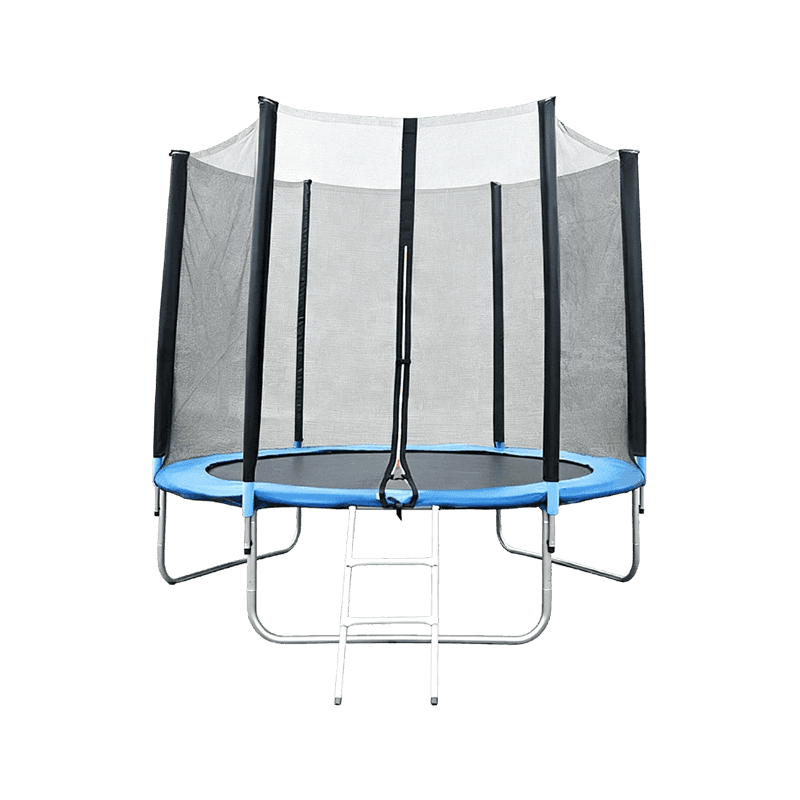
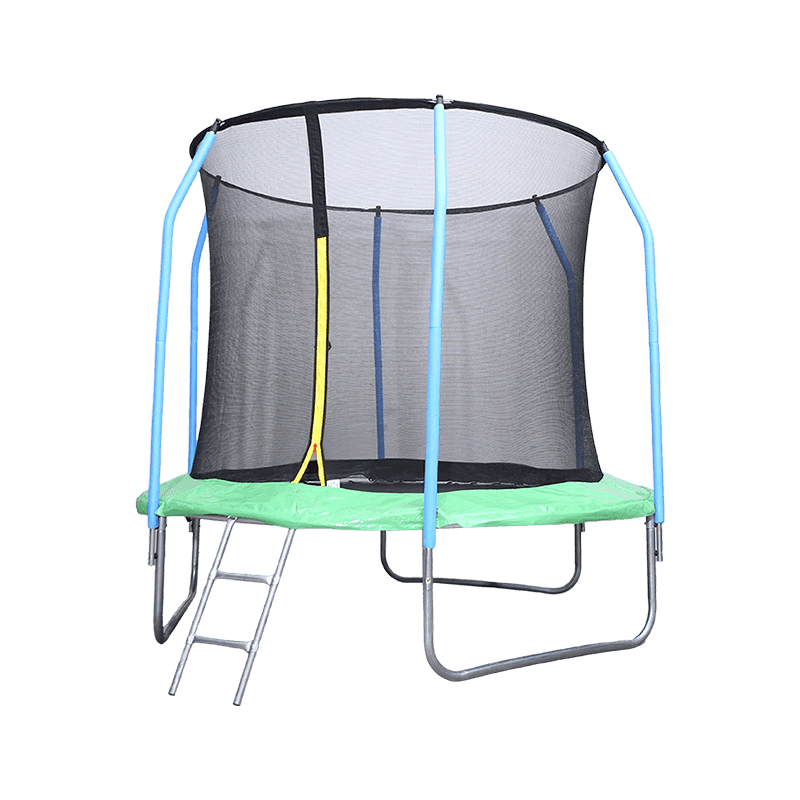
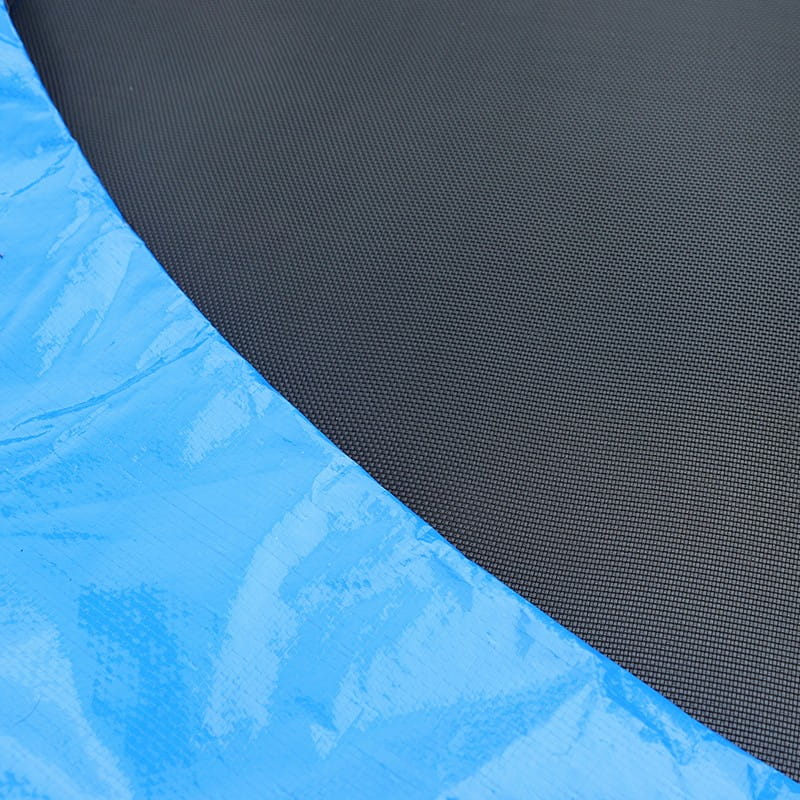 10FT Outdoor Trampoline with Outside Safety NetA practical 10ft round option for smaller yards, with outside net, galvanized frame and springs, ladder, and foam-covered edges for family backyard use.View Product →
For smaller yards or families who want a straightforward outdoor model with the safety net on the outside, a 10ft design can be a practical middle ground. It offers enough jumping room for children and lighter adult use without dominating the whole garden.
Choosing the Right Size for Your Family and Yard
Size is where excitement and reality need to meet. A larger trampoline can be more fun, but it also needs more clearance, more stable ground, and more confidence from the adults who will supervise it. Before comparing models, measure the actual space available and think about how people will walk around the trampoline, mow the lawn, and open gates or doors.
| Size or shape | Best for | What to check before buying |
|---|---|---|
| 8 ft round | Small yards, younger children, one or two jumpers | Net height, ladder placement, and safe side clearance |
| 10 ft round | Families with children who want room to grow | Spring cover width, frame stability, and entry design |
| 12 ft round | Family use, multiple children, longer jumping sessions | Yard clearance, pole padding, and mat stitching |
| 14 ft round | Larger families and generous backyards | Ground level, wind anchoring, and access for maintenance |
| 8 x 12 ft rectangular | Longer jump paths and a more structured yard layout | Corner safety, ladder position, and available length |
Allow a comfortable walking zone around the trampoline and keep the area free of toys, stones, furniture, and low branches. If the trampoline sits too close to a fence or wall, even a well-built net cannot do its job properly. Also think about the view from inside the house. Being able to see the trampoline easily makes supervision more natural.
These are practical planning targets, not a substitute for the manufacturer’s instructions. The key is to leave enough room for safe entry, exit, and maintenance while avoiding hard surfaces or overhead obstacles.
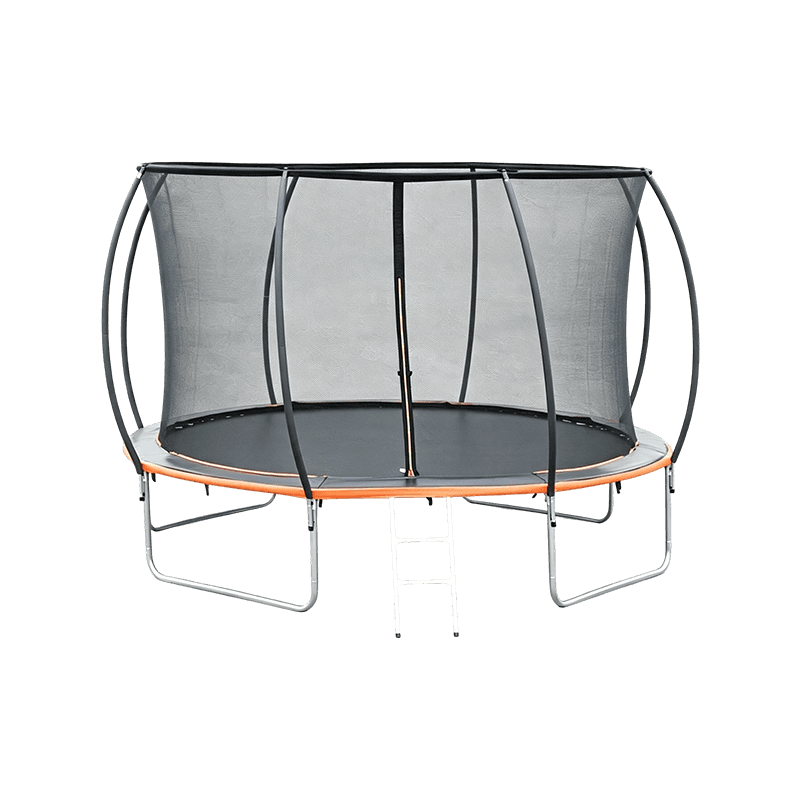
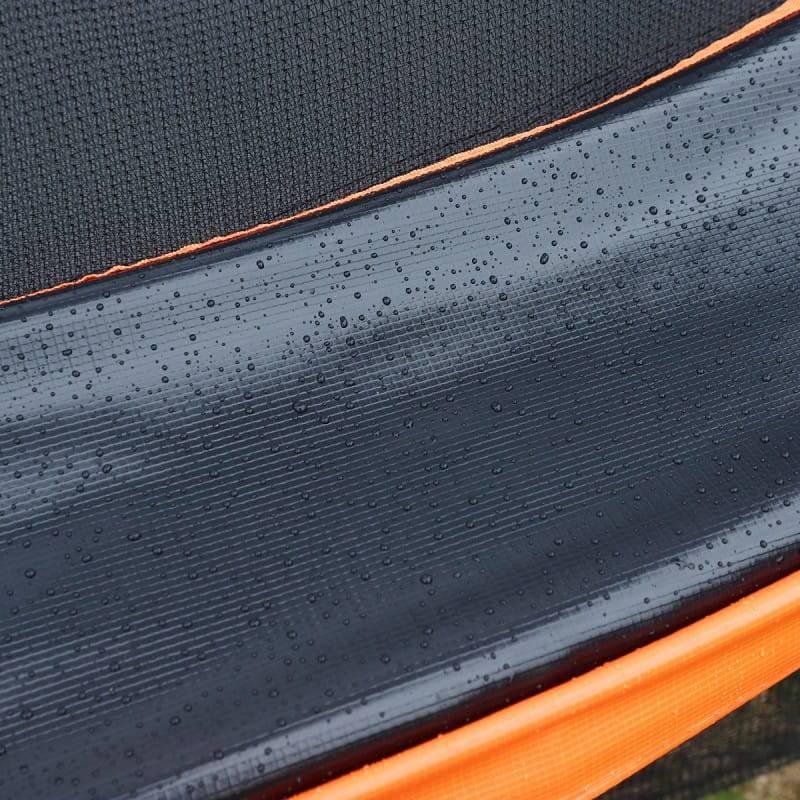 12FT Round Trampoline with Curved Arch EnclosureA 12ft family backyard trampoline with inside net and curved arch poles, offering a clear jumping area plus galvanized frame, ladder, and spring padding.View Product →
A 12ft round trampoline with an inside net and curved arch poles is a common choice for family backyards because it keeps the jumping area clear and gives the net a more open feel. It suits homes where children and adults will share the trampoline regularly.
Round vs. Rectangular Outdoor Trampolines
Round trampolines remain the most familiar choice for family backyards. They spread bounce toward the center, which can make movement feel predictable, and they fit neatly into many garden layouts. Rectangular trampolines offer a longer, more even bounce path and can suit users who want a more athletic feel or a trampoline that follows the lines of a rectangular yard.
| Feature | Round trampoline | Rectangular trampoline |
|---|---|---|
| Bounce feel | Centered and predictable | Longer and more linear |
| Space planning | Easy to fit into corners and smaller yards | Needs a longer clear area |
| Family use | Natural for children and mixed-age jumpers | Good for older children and adults |
| Net and frame | Usually simpler to walk around | More corners to inspect and pad |
Neither shape is automatically safer or better. The right choice depends on the users, the yard, and the quality of construction. A well-made round trampoline will outperform a poorly made rectangular one every time, and the reverse is also true.
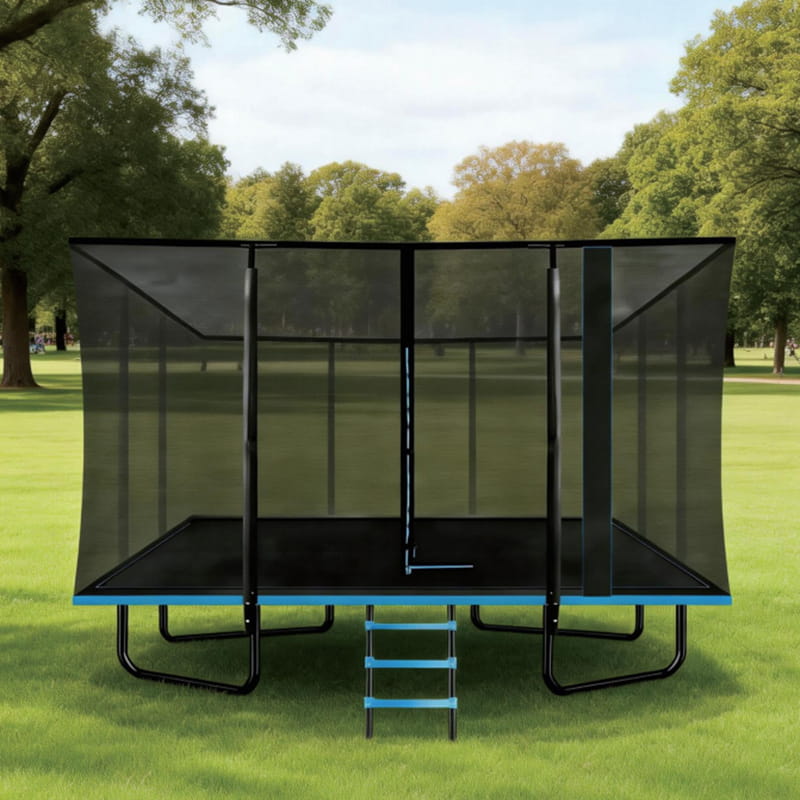 8 x 12FT Rectangular Outdoor Trampoline with EnclosureA longer rectangular trampoline for backyard training and family exercise, with enclosure net, non-slip ladder, galvanized frame, and weather-resistant spring padding.View Product →
An 8 x 12 ft rectangular outdoor trampoline with a ladder and enclosure can work well in a longer garden where the family wants a defined jump path and easy access. Just check the corners carefully, since corners are where padding and net connections receive extra stress.
Inside Net vs. Outside Net: What Changes in Daily Use
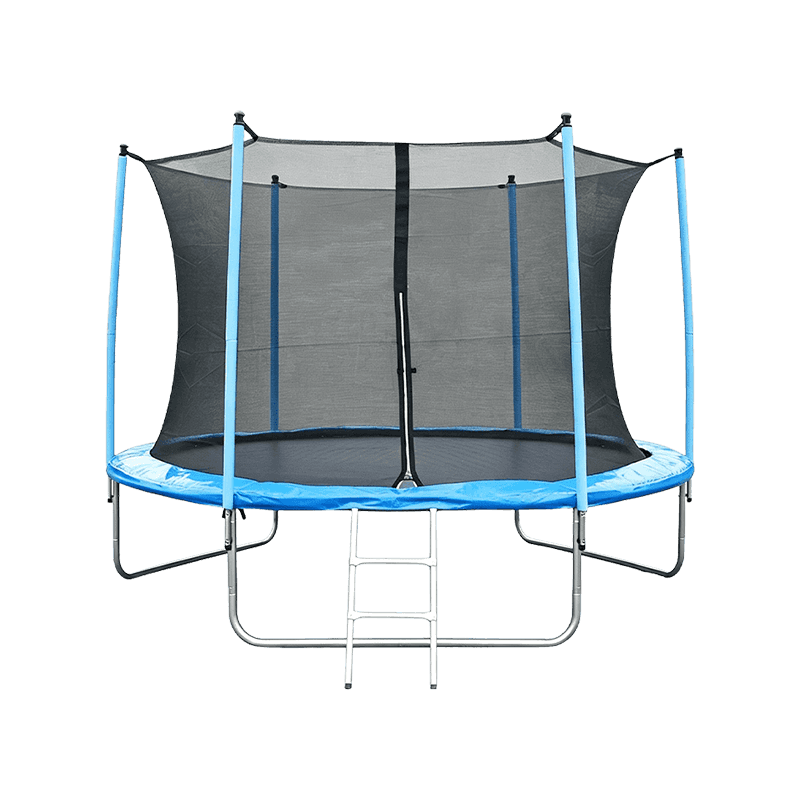
The net position affects how the trampoline feels, how easy it is to enter, and how much space the whole structure takes up. An inside net sits within the jumping area and is attached closer to the mat, which can keep the usable bounce zone more open. An outside net sits beyond the springs and padding, giving the jumping area a different feel and often making the frame easier to inspect from the outside.
Inside net
Often chosen when the family wants a clean jumping area and a more open view through the net. Check that the net attachments are protected and that the entry does not create a gap.
Outside net
Usually straightforward to walk around and inspect. The spring area and frame are easier to see, but the net and poles still need regular checks for tension and padding wear.
Whatever the design, the net should be taut enough to guide users without feeling like a wall. Zippers, buckles, and entry flaps deserve a monthly check. If a child can open the entry too easily, or if the net has lost tension, fix it before the next jumping session.
Placement, Ground Prep, and Backyard Safety
Most trampoline accidents that families can prevent are not about the trampoline itself. They are about placement, access, and supervision. A trampoline on uneven ground can rock. A trampoline near a patio, tree, or fence can turn a fun bounce into a dangerous one. A trampoline without a clear rule about shoes, toys, and number of jumpers invites trouble.
- Choose level ground: Grass or a suitable shock-absorbing surface is better than concrete, gravel, or paving. The frame should sit flat without digging into soft soil.
- Keep the area clear: Remove stones, branches, toys, and furniture. Avoid overhead wires, branches, and roof edges.
- Anchor the trampoline: Use the manufacturer’s anchoring system and check it after storms. Wind can move even a heavy trampoline if it is not secured.
- Control access: Remove or secure the ladder when younger children are not supervised. Set clear rules about one jumper at a time and no rough play near the net.
- Inspect before use: Look for loose bolts, stretched springs, torn padding, and net gaps. A two-minute check is a small habit with a big payoff.
Supervision matters more than any single feature. A safety net is a support, not a babysitter. Younger children need an adult nearby, and older children still need clear limits. It also helps to agree on a “wet weather” rule, because a damp mat and wet springs are more slippery than most people expect.
Materials and Manufacturing Details That Matter
Outdoor trampolines live in a tough environment. Sun exposure breaks down poor-quality padding. Rain finds every small gap in a weld or coating. Temperature changes test the frame and net attachments. That is why the materials and manufacturing process deserve attention, even if they are not visible in a product photo.
- Galvanized steel: Good frame protection starts with proper surface preparation and a consistent coating. Look for clean welds and no sharp edges around joints.
- UV-resistant padding: Foam and fabric should be thick enough to protect against impact and stable enough to resist cracking and fading.
- Spring and band quality: Springs should be properly tempered and covered. Elastic bands should be checked for wear and replaced when they lose tension.
- Precision assembly: Pole connections, net attachments, and entry systems should line up correctly. Poor alignment creates stress points that show up later.
Our team has spent more than a decade developing and manufacturing trampolines, and we still believe the best quality control is practical rather than theoretical. It means checking raw materials, cutting and bending accuracy, welding, rust prevention, and final assembly. You can read more about our manufacturing process if you are comparing suppliers or want to understand what happens behind the product.
For families, the takeaway is simple: choose a trampoline that can be inspected and maintained. For buyers and brands, the takeaway is equally simple: ask how the frame is protected, how the padding is tested, and how the finished trampoline is packed and checked before shipment.
Maintenance Habits That Keep an Outdoor Trampoline Ready
A trampoline does not need constant attention, but it does need regular, small care. The goal is to catch little problems before they become expensive ones. A loose bolt, a stretched spring, or a small tear in the padding is easy to fix early and much harder to ignore later.
- Weekly: Remove leaves and debris, check the entry flap, and look for obvious tears or loose padding.
- Monthly: Tighten bolts, inspect springs or bands, and check the net for sagging or damaged attachments.
- Seasonally: Clean the mat with mild soap and water, check the frame for rust spots, and confirm that anchors are secure.
- After storms: Check for shifted frames, trapped branches, and water pooling on the mat or padding.
If you live in an area with strong sun, cold winters, or heavy rain, consider a cover or a seasonal storage plan. Never use harsh chemicals on the mat or net, and do not let children jump on a wet or damaged trampoline. A well-cared-for outdoor trampoline can remain a dependable part of the backyard for years.
Working With a Trampoline Manufacturer: What Buyers Should Ask
For retailers, distributors, and brands, the product itself is only part of the decision. The supplier behind it shapes consistency, lead time, customization, and long-term confidence. A good manufacturing partner should be able to explain the frame specification, the padding construction, the net system, and the quality checks without hiding behind vague claims.
- Customization: Can the supplier adjust size, shape, net position, color, logo, packaging, and accessories?
- Quality control: What is checked from raw material to finished goods, and how are safety and durability tested?
- Production capacity: Can the factory handle both standard orders and smaller custom runs?
- Communication: Are drawings, samples, and approval steps clear before mass production begins?
We work with global customers on standard and customized trampoline programs, including OEM and ODM projects based on drawings and samples. If you are planning an outdoor trampoline range, you can start a conversation through our contact page. The best projects begin with clear questions, realistic specifications, and a shared understanding of how the product will be used.
Frequently Asked Questions About Outdoor Trampolines
How much space do I need around an outdoor trampoline?
Leave a clear walking and falling zone around the trampoline, and keep it away from fences, walls, trees, and hard surfaces. A common planning target is about 6 feet of side clearance, but always follow the manufacturer’s instructions for the specific model.
Are outdoor trampolines safe for young children?
They can be, with the right supervision and rules. Younger children should use a trampoline that matches their size and ability, with an adult nearby, a secure entry, and no rough play. Always remove access when the trampoline is not supervised.
Should I choose an inside net or an outside net?
Both designs can be safe and practical. Inside nets often create a more open jumping area, while outside nets are usually easier to walk around and inspect. The quality of the net, padding, and attachments matters more than the label alone.
Can an outdoor trampoline stay outside all year?
Most outdoor models are designed for outdoor use, but long-term performance depends on materials, climate, and care. Check the frame for rust, clean debris from the mat, secure the anchors, and protect the trampoline during severe weather if possible.
How many people should jump at once?
Follow the manufacturer’s recommendation and set a family rule. For most backyard trampolines, one jumper at a time is the safest approach, especially when children of different ages or sizes are using it.
What is the first thing to check on a used outdoor trampoline?
Inspect the frame, springs or bands, mat stitching, padding, and net attachments. Look for rust, sharp edges, sagging, and tears. If the structural parts or safety padding are compromised, replace them before use.